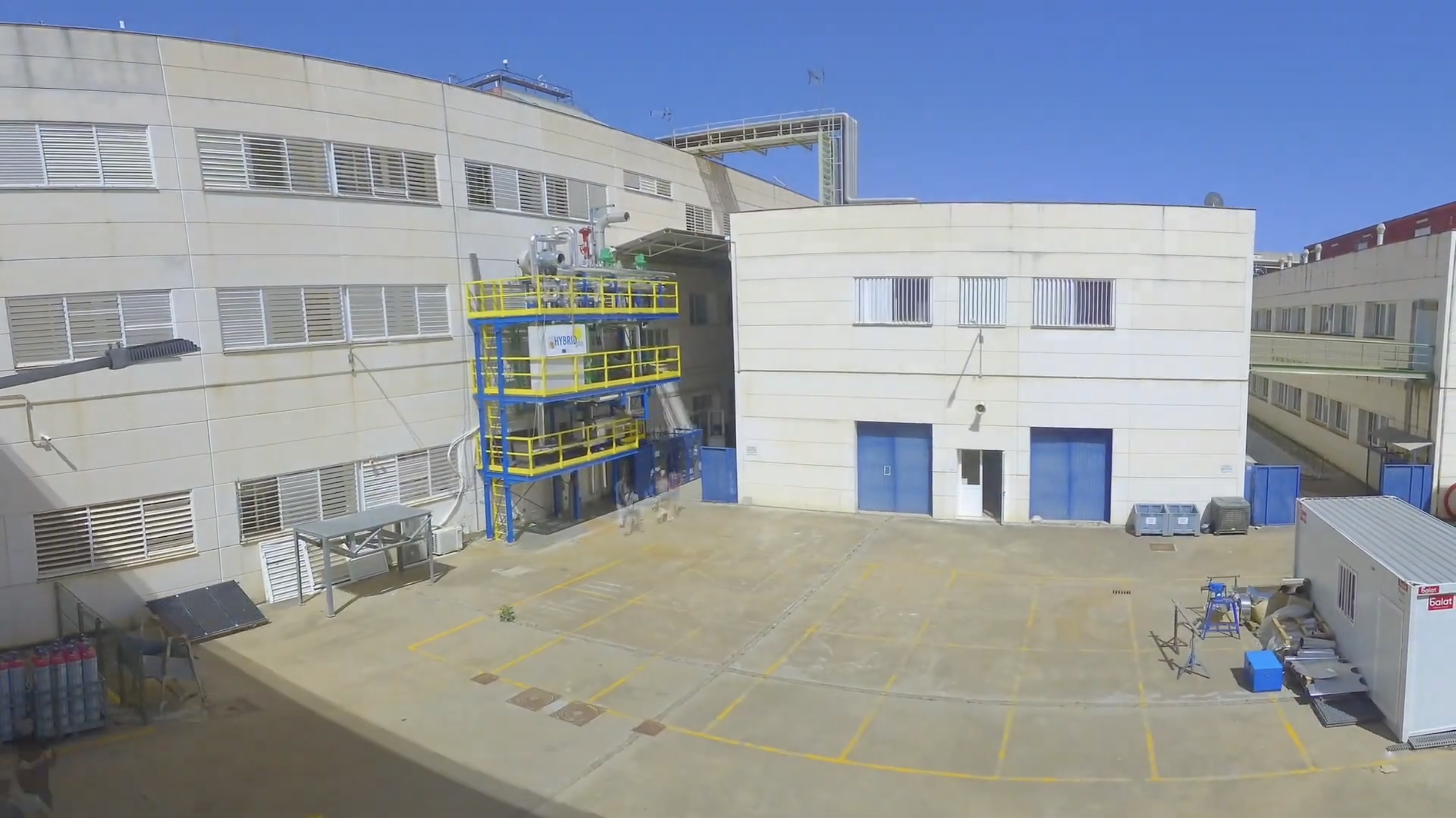
The HYBRIDplus consortium is pleased to announce the completion of the construction of its new pilot plant at the University of Seville. This achievement represents a major milestone in the project’s progress towards demonstrating flexible, high-temperature and electrified thermal energy storage solutions.
A flexible platform for high-temperature thermal storage
The HYBRIDplus pilot plant has been designed as a highly flexible experimental platform for the validation of electrified Thermal Energy Storage (e-TES) solutions, with a particular focus on advanced cascade Phase Change Material (PCM) thermal energy storage systems. By combining sensible heat storage technologies with latent heat storage modules operating at different temperature levels, the facility enables the demonstration and optimisation of the HYBRIDplus concept under representative operating conditions. Its modular configuration allows different PCMs to be tested across multiple temperature ranges, reproducing the cascaded storage concept developed within HYBRIDplus. The facility is particularly suited to the validation of multi-temperature thermal storage architectures, enabling the assessment of advanced cascade PCM concepts under realistic operating conditions. The plant includes two independent and fully reconfigurable storage modules that can be operated either individually or connected in series. This unique configuration provides a versatile platform to evaluate storage materials, module designs, heat-exchanger concepts, charging and discharging strategies, and control approaches under realistic operating conditions.
Beyond the HYBRIDplus project, the facility is intended to serve as a reference infrastructure for the development, validation and industrial scale-up of next-generation e-TES technologies, supporting future research and the deployment of flexible thermal energy storage solutions.
Validating technologies
The plant integrates different electrical heating solutions for Power-to-Heat (P2H), including an in-line heater for the heat-transfer fluid and electric heaters embedded within the storage modules. This configuration enables the validation of both direct heat electrification and electrically charged thermal energy storage concepts, supporting the assessment of different charging strategies and operating modes.
In addition, the pilot can operate with solar salts, ternary molten-salt mixtures and other heat-transfer fluids, providing a flexible environment for the evaluation of a wide range of sensible and latent thermal storage solutions. Its extensive instrumentation and adaptable control system allow the consortium to investigate fluid behaviour, heat transfer, thermal performance, degradation mechanisms, corrosion phenomena, dynamic response and long-term cycling under realistic operating conditions.
The combination of advanced instrumentation, flexible operating conditions and multiple storage technologies makes the facility particularly valuable for the validation and optimisation of next-generation e-TES systems.
Commissioning and system verification. The commissioning activities cover the progressive verification of the complete facility, including mechanical and electrical integration, instrumentation, control and safety systems, hydraulic operation, heating equipment and communication between the different plant components.
Functional testing and control-system validation are essential to ensure safe and reliable operation across the wide range of temperatures, materials and operating modes required by the HYBRIDplus experimental programme.
Next steps
The next phase will focus on the experimental validation of the HYBRIDplus cascade PCM storage concept and its integration within an electrified thermal energy storage (e-TES) architecture. Particular attention will be given to the interaction between sensible and latent heat storage, charging and discharging strategies, system flexibility, and overall thermal performance under realistic operating conditions. The experimental results will be compared with the numerical simulations developed within HYBRIDplus, providing the data required to validate, calibrate and improve the project’s thermal and dynamic models. This iterative process between experimentation and modelling will help identify any deviations from the predicted behaviour, refine the representation of the storage system and support the optimisation and future industrial scale-up of the HYBRIDplus concept.
Beyond the validation of the HYBRIDplus technology, the pilot plant will provide a unique environment for the testing and demonstration of advanced e-TES solutions, contributing to the development of flexible thermal energy storage systems for renewable energy integration and industrial decarbonisation.
Stay tuned for updates as the pilot enters its commissioning, monitoring and validation phase and begins delivering its first performance results.